


New Developments in ChatGPT Ads: How Conversational AI Is Changing Brand Discovery and Conversion
From conversational intent matching to intelligent ad creation and conversion optimisation, ChatGPT Ads is developing new advertising capabilities. For cross-border brands, these developments also raise new marketing questions: how can AI accurately understand a brand’s value, and how can content visibility, advertising exposure and real business growth be connected?
On 4 November 2026, OpenAI hosted an online session entitled Your 2026 ChatGPT Ads Holiday Playbook, outlining the latest developments in ChatGPT Ads across ad delivery, product displays, conversion measurement and intelligent optimisation.
The session focused on the US year-end shopping season and was primarily aimed at retailers and direct-to-consumer (DTC) e-commerce brands. From a broader digital marketing perspective, however, OpenAI is exploring a noteworthy advertising model: giving brands opportunities for relevant paid placements as users turn to AI to explore needs, compare options and form purchase intentions.
For cross-border brands, educational institutions and professional services firms, the central implication is that, as AI becomes more involved in information searches and commercial decisions, brands need to reconsider how their information is understood, how advertising is matched to user needs, and how marketing performance connects to actual business outcomes.
01. From Keywords to Conversational Intent: How AI Is Changing Brand Discovery
Traditional search advertising typically begins with keywords. Users enter a search term, and platforms determine which ads to display based on factors such as search intent, ad relevance and bidding. In conversational AI environments, user needs often become clearer through a series of exchanges.
For example, a consumer might initially ask ChatGPT for holiday gift ideas, then follow up with questions about different products’ features, use cases, prices and differences. As the conversation progresses, a broad need becomes a more specific set of selection criteria. The ad-matching mechanism behind ChatGPT Ads is evolving around this type of interaction. According to OpenAI, the system considers factors including the context and intent of the current conversation, ad copy, landing-page content and relevant scenario prompts provided by advertisers. Importantly, ads in ChatGPT appear as separately labelled sponsored content, distinct from the AI’s organic responses. Advertisers cannot pay to change ChatGPT’s answers or organic recommendations.
Market data is also drawing attention to the commercial potential of conversational AI. In its 2026 holiday shopping forecast, Adobe projected that AI-referred traffic to US retail websites would increase by 130% year on year. This figure covers AI referrals broadly; it does not represent traffic growth or advertising conversion performance attributable specifically to ChatGPT Ads. Nevertheless, these developments point to an important trend: consumers are increasingly using AI to gather information, compare options and prepare for decisions. For brands, understanding which questions their target audiences ask, and in what circumstances, is becoming an important starting point for assessing new traffic entry points.
02. From Ad Creative to Brand Information Assets: Why Accuracy and Clarity Matter More
Throughout the session, OpenAI repeatedly emphasised that websites and landing pages are important sources of information for advertising systems seeking to understand businesses and products.
Brands need to explain clearly what products or services they offer, who they are for, their core value and other relevant details, while ensuring that the pages can be accessed and read by the system. These requirements have much in common with the information-quality priorities of SEO, GEO and AEO. As AI systems become involved in interpreting information and matching ads, the clarity of a brand’s website, product information, FAQs, case studies and specialist content affects how accurately the system can identify the brand and the value of its services.

New ChatGPT Ads capabilities reflect this direction. OpenAI has made Product Feed Ads available in the Ads Manager Beta, enabling retail advertisers to display product images, prices and related information through structured product data. Meanwhile, Creative Enhancements can use ad and landing-page content to adjust headlines, descriptions, language or image dimensions for different conversational contexts.
The session also previewed an intelligent ad creation process that uses a business website to understand the business, suggest advertising objectives and generate creative assets. This experience is being introduced progressively and should not be regarded as a standard feature available to every advertising account. These developments suggest that advertising automation is moving beyond bidding and delivery management towards understanding brand information and adapting creative content. Yet the greater the automation capability, the more important it becomes to manage the underlying information. Inaccurate product descriptions, unclear service boundaries or outdated details can all affect ad accuracy. For education, finance, healthcare and other sectors involving complex decisions or tighter regulation, reliable information sources, clear service descriptions and rigorous content review are particularly important.
03. As Conversion Optimisation Evolves, Brands Must Still Focus on Real Business Outcomes
Another important development in ChatGPT Ads is the continued improvement of ad delivery and conversion measurement capabilities.
OpenAI now provides features including Pixel, Conversions API, conversion-optimised objectives and automated bidding, helping eligible advertisers use website behaviour and business events to optimise ad delivery. Depending on their business needs, advertisers can use supported events such as purchases, registrations or lead submissions as optimisation objectives. Different conversion-optimised options may be billed on a valid-click or impression basis and use the corresponding conversion-attribution signals to assess performance. Click-through conversions and view-through conversions provide different perspectives on attribution.
However, conversions attributed by an advertising platform do not, on their own, prove that every conversion was caused by the ads. Brands still need to consider order data, customer relationship management (CRM) records and other business information to assess marketing’s actual contribution. This is especially important for high-value products and services with long decision cycles. In higher education recruitment, for example, the journey from first discovering a programme to attending an information session, making an enquiry, applying and ultimately enrolling usually involves multiple touchpoints. A single ad click or form submission captures only one stage. For professional services firms, enquiry volume also needs to be evaluated alongside fit with client needs, subsequent discussions and genuine business opportunities.
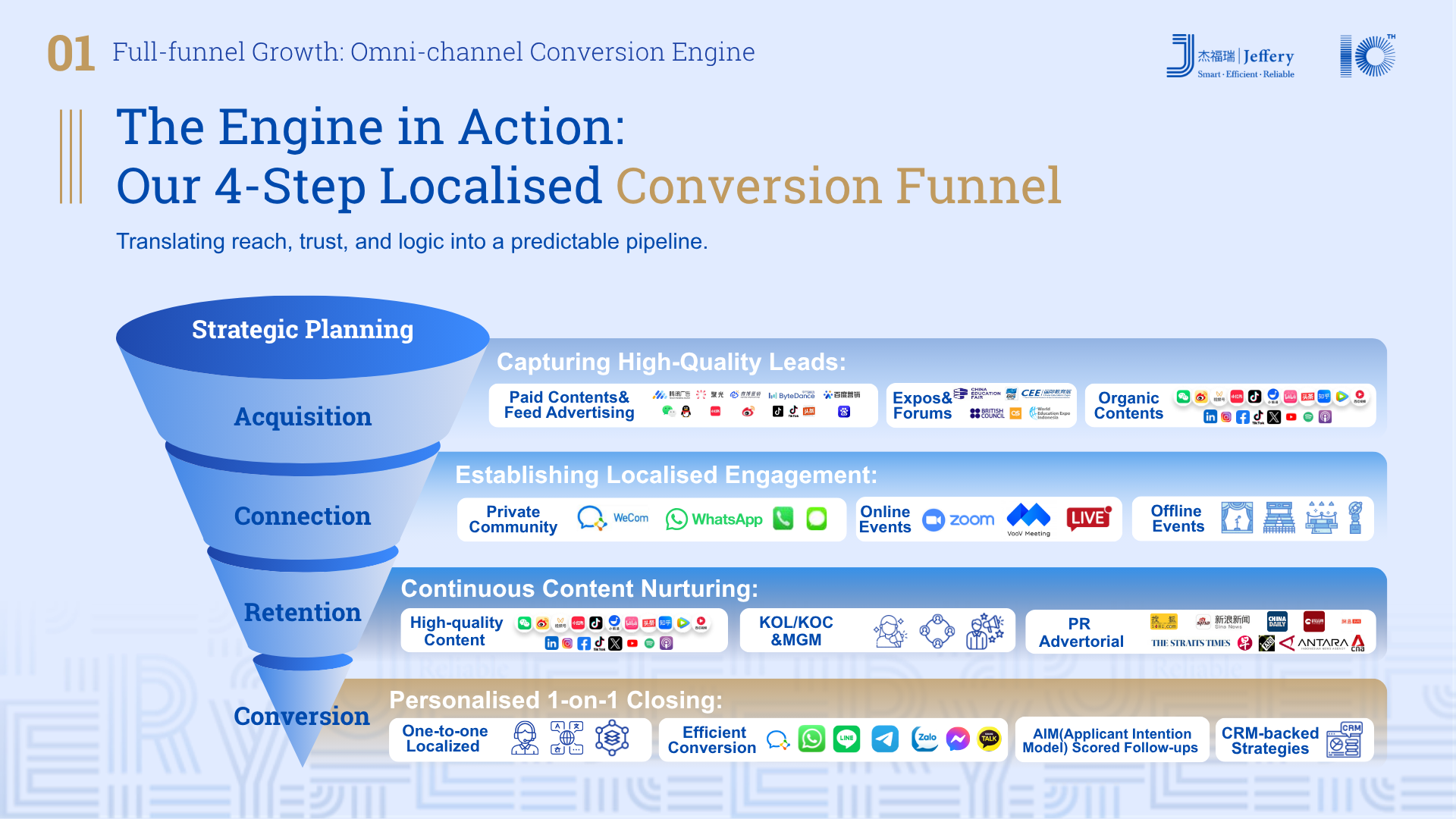
As AI advertising optimisation develops, marketing measurement therefore needs to move beyond in-platform engagement metrics and connect more closely to meaningful conversions aligned with business objectives. The same principle applies to existing search advertising, social media advertising and other digital marketing channels.
04. From AI Visibility to Business Growth: Connecting AEO, Content Assets and Performance Marketing
The development of ChatGPT Ads is also bringing two distinct paths to brand visibility in AI environments into clearer focus.
On the one hand, Answer Engine Optimisation (AEO) focuses on helping brands be accurately understood, mentioned and cited in AI-generated organic responses. On the other, ChatGPT Ads offers a separate paid advertising opportunity for eligible advertisers to reach potential customers in relevant conversational contexts. The two mechanisms operate differently and require different approaches to measurement. Buying ChatGPT Ads cannot guarantee visibility in organic AI responses, and advertising cannot replace long-term content development or the building of brand trust.
In response to this trend, Jeffery Asia brings together three interconnected capabilities to help brands integrate AI visibility, content asset development and full-funnel conversion.

Audience Intelligence: Understanding target audiences and their decision-making contexts.
Through market research and its proprietary product, JefurryAxis, JA conducts audience profiling and decision-making scenario analysis to identify target audiences’ needs and inform AEO content strategies. Combined with AI visibility analysis, content optimisation and ongoing monitoring, this approach enables JA to assess brand performance across different AI models.
Content Asset Engine: Building accurate, credible and enduring content assets.
Through website content, product information, specialist articles, case studies and multi-channel brand communications, this capability helps prospective customers and relevant information systems understand a brand’s positioning and the value of its services. These assets also support search visibility, AI interpretation of information and communications across other marketing channels.
Omni-channel Conversion: Connecting touchpoints across channels to subsequent business processes.
Through cross-platform advertising, content operations, lead generation, customer engagement and CRM follow-up, this capability connects brand discovery with subsequent conversion stages in an integrated marketing journey. For cross-border businesses, that journey may span Google, Meta, LinkedIn, WeChat, Xiaohongshu (RedNote) and various AI platforms. User behaviour, platform environments and conversion pathways differ across markets, so strategies need to reflect each client’s specific needs. ChatGPT Ads may be another channel worth evaluating, but its business value must be validated against actual advertising eligibility, audience coverage, compliance requirements and conversion data.
05. Implications for Cross-Border Brands: From Evaluating Ad Opportunities to Long-Term Measurement
As of November 2026, ChatGPT Ads Manager remains in beta, with ad formats, intelligent optimisation and conversion measurement capabilities continuing to evolve. OpenAI has included Singapore among the locations that support self-service advertising accounts. However, account eligibility does not mean that ads can be delivered to every target market; audience coverage, account permissions and advertising policies still need to be checked. Opportunities also differ by industry. Retail and e-commerce brands may focus on product feeds, website conversion signals and creative automation. Educational institutions and professional services firms should first verify advertising eligibility, then assess whether enquiries, registrations or lead events reflect their business objectives. Healthcare and financial advertising face stricter restrictions. Under OpenAI’s current policies, ads for the relevant services outside the United States are generally prohibited or heavily restricted, so retail advertising approaches cannot simply be applied to these sectors.
ChatGPT Ads offers brands a new commercial route into the conversational AI ecosystem, although its long-term value still needs to be validated across different markets and industries. Cross-border brands can begin by defining audiences and decision-making scenarios, improving verifiable brand information, building content assets across channels, and connecting marketing data with actual business outcomes. These foundations help brands test emerging AI advertising channels in a structured way and assess their role within the wider marketing mix.
Jeffery Asia will continue to monitor developments in AI advertising, AEO and cross-border digital marketing, drawing on audience research, content asset development and full-funnel conversion capabilities to help brands make better-informed marketing decisions.
To find out how Jeffery Asia can help your brand assess AI visibility, content strategy and cross-border marketing opportunities, contact success@jeffery.asia or visit https://jeffery.asia.
Found this useful? Send it to a colleague or share it with your network.
Turn market intelligence into measurable growth.
Book a complimentary Growth Diagnostic and we’ll translate the latest signals into a precision plan for your stage, goals and region.
